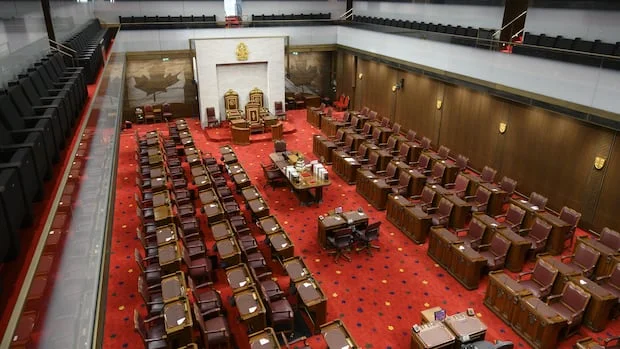
Two priority pieces of government legislation, including Bill C-4 which implements promised tax cuts and addresses political party privacy rules, will not become law until at least February after the Senate declined to fast-track their passage before Parliament's winter recess. The upper chamber's decision to study the bills in the new year has created a legislative bottleneck, leaving the Carney government's budget implementation agenda partially stalled despite last-minute efforts to push bills through the House of Commons before the holiday break.
Senate Pumps the Brakes on Rushed Legislation
When the House of Commons concluded its sitting last week, government officials had hoped that Bill C-4 and its companion measure, Bill C-12, would progress through the Senate before lawmakers departed for their two-month winter break. That outcome never materialized. The Senate, which typically concludes its sitting calendar around the same time as the lower chamber, chose not to extend its session to accommodate the late-arriving bills.
According to communications from Pierre Moreau's office, the upper chamber determined that rushing through these complex pieces of legislation would have been inappropriate. Senate leadership emphasized that both bills warrant thorough examination and study, particularly given their scope and implications for Canadian taxpayers and voters.
The Challenge of Omnibus Legislation
The Senate's reluctance to accelerate passage of Bill C-4 reflects growing frustration among senators over the government's reliance on large omnibus bills that bundle multiple policy objectives into single legislative vehicles. Senators have expressed concern that such packages make detailed review and amendment difficult, particularly when Parliament faces approaching adjournment deadlines.
Alberta Senator Scott Tannas articulated these concerns earlier this fall, noting that the Senate's constitutional role includes protecting regional representation and minority interests in the lawmaking process. When bills arrive late in a parliamentary sitting and face pressure for rapid passage, senators argue that their ability to propose meaningful amendments becomes compromised, especially if members of the House have already departed Ottawa.
The Senate's two-chamber system was deliberately constructed to slow legislation and ensure careful deliberation, Tannas wrote. That foundational principle has been tested repeatedly as governments seek to move their agendas through Parliament efficiently. This year's experience with Bill C-4 and Bill C-12 illustrates the ongoing tension between legislative urgency and parliamentary scrutiny.
What Bill C-4 Actually Contains
Bill C-4 primarily addresses tax cuts that the Liberal government promised during last year's election campaign. These reductions are already in effect but still require formal legislative authorization to become permanent law. The bill represents a significant portion of the government's economic agenda and its passage has been a priority since the Carney administration took office.
Beyond tax policy, however, Bill C-4 contains a controversial final section dealing with how federal political parties manage Canadians' personal information. This privacy component has drawn particular scrutiny from the Senate, which views the current protections as insufficient.
Privacy Provisions Trigger Senate-Commons Clash
The privacy section of Bill C-4 emerged from an ongoing legal dispute in British Columbia regarding whether provincial privacy legislation should apply to federal political parties. Currently, federal parties operate outside the scope of private-sector privacy law, meaning voters have no statutory right to access, correct, or delete personal information that parties collect about them. Similarly, the Office of the Privacy Commissioner lacks authority to investigate data breaches involving party voter files.
The Senate proposed adding a sunset clause to these privacy provisions, effectively making them time-limited rather than permanent. This amendment would have forced Parliament to revisit the issue and potentially strengthen protections in future years. The upper chamber's move reflected concerns that the bill's privacy measures do not adequately hold political parties accountable for safeguarding voter and candidate data.
The House of Commons rejected the Senate's amendment on Thursday, with Government House Leader Steven MacKinnon arguing that elected members of Parliament should determine rules governing federal elections rather than the Senate imposing constraints through procedural mechanisms. The Commons motion cited a long parliamentary tradition of the Senate deferring to the House on amendments to the Canada Elections Act.
However, the government did not simply dismiss the Senate's concerns. In its response, the Commons acknowledged the privacy issues and committed to introducing additional legislative measures addressing them during the current parliamentary session. This pledge suggests the government recognizes gaps in the current framework but prefers to address them through separate legislation rather than accepting the Senate's proposed sunset clause.
Timeline and Parliamentary Logistics
Parliament is scheduled to resume sitting on February 3rd, at which point the Senate will begin its formal study of Bill C-4 and Bill C-12. Senate leadership has indicated it will develop a plan to review these bills efficiently once members return, though no expedited timeline has been announced.
The Senate's decision not to extend its sitting beyond December 11th reflects a broader institutional resistance to the practice of last-minute legislative marathons. In previous years, the upper chamber has occasionally sat beyond the House of Commons' adjournment to accommodate late bills, but this year's Senate chose to maintain its scheduled calendar.
Government House Leader MacKinnon's office expressed respect for the Senate's decision while noting satisfaction that both bills had at least cleared the House before the break. From the government's perspective, moving legislation through the Commons represents meaningful progress, even if royal assent remains months away.
Broader Context of Government Legislative Agenda
The stalling of Bill C-4 and Bill C-12 comes amid broader challenges in moving the government's legislative program through Parliament. The Carney administration, elected last year, has faced a crowded parliamentary calendar with numerous bills competing for time and attention. The Senate's decision to simultaneously begin studying Bill C-15, the fall budget implementation bill, at eleven different committees further constrained the upper chamber's capacity to pre-study other pending legislation before the winter break.
This legislative logjam reflects structural challenges in the Canadian Parliament, where the volume of government business often exceeds the available time for thorough debate and amendment. The tension between executive urgency and parliamentary deliberation remains unresolved, with senators continuing to assert their role as a chamber of sober second thought even as governments press for faster legislative movement.
Related Articles
- Whistler Blackcomb forced to close peak terrain after major rockslide; implications for resort operations and climate risk management
- Telus Digital breach exposes nearly one petabyte of data in sprawling cyberattack
- El Niño's Return Could Drive Record Global Temperatures and Reshape Financial Markets in 2027
<p>Bill C-4's delayed passage underscores the Senate's determination to maintain its role as a deliberative chamber, even when that determination frustrates government timelines. While the tax cuts embedded in the legislation are already in effect, their formal legal authorization will now wait until at least February. The privacy provisions that prompted the Senate's amendment will also remain unresolved pending the government's promised follow-up legislation. For the Carney government, the delay represents a modest setback in its efforts to implement its election platform, though officials have emphasized that moving bills through the House before adjournment constitutes meaningful progress regardless of Senate timing.</p>


