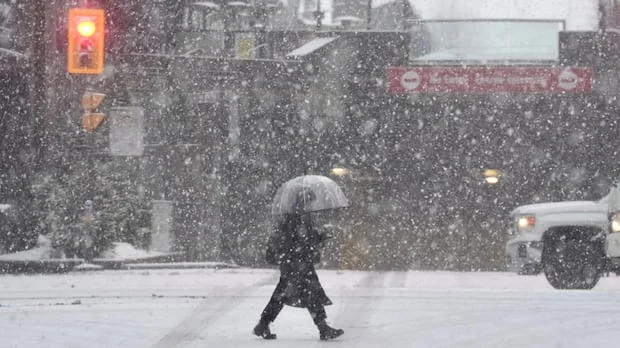
Extreme weather patterns sweeping across North America are emerging as a significant financial risk for businesses and municipalities, forcing organizations to grapple with unexpected operational disruptions and revenue losses. From sudden snowstorms in the Greater Toronto Area to record-breaking heat waves in the American Southwest, volatile weather conditions are straining budgets and forcing companies to invest in contingency planning. The financial impact extends beyond immediate weather response costs, affecting tourism revenue, transportation networks, and consumer spending patterns across the continent.
Canadian Winter Weather Disrupts Regional Operations
Environment Canada's recent yellow weather warning for parts of the Greater Toronto Area highlights the financial consequences of unpredictable winter weather. The warning, issued for Vaughan, Richmond Hill, Markham, and Durham Region, forecasted up to 15 centimetres of snowfall with rates reaching five centimetres per hour—conditions that create immediate operational challenges for businesses and municipal services.
The Toronto area faced multiple weather systems over consecutive days, with initial snowfall expected Friday followed by additional accumulation Sunday and Monday. These rapid-fire weather events force businesses to absorb unexpected costs related to snow removal, road treatment, and operational adjustments. The City of Toronto's decision to open five warming centres reflects the broader financial burden municipalities shoulder during severe weather events, including staffing, utilities, and facility maintenance.
For transportation and logistics companies operating in the GTA, such weather events translate directly to increased expenses and potential revenue losses. Delivery delays, vehicle maintenance costs from winter road conditions, and reduced consumer mobility all impact the bottom line. Retailers and service providers similarly experience disrupted foot traffic when severe weather discourages customers from venturing out.
U.S. Weather Extremes Present Broader Economic Challenges
The United States is facing an unprecedented pattern of weather extremes that spans the entire continent, creating a more complex financial picture. A heat dome forming over the Southwest threatens to deliver record-breaking temperatures—with Phoenix potentially reaching 37 degrees Celsius early in the week and climbing to nearly 42 degrees Celsius in subsequent days. This level of heat, arriving months earlier than historical norms, has significant economic implications.
The agricultural sector faces particular vulnerability to early-season extreme heat. Crops requiring specific temperature ranges for optimal growth face stress from unseasonable warmth, potentially affecting yields and driving up food prices across North America. Energy demand spikes during heat waves as air conditioning usage increases substantially, raising utility costs for consumers and straining electrical grids that may not be fully prepared for such early-season demand surges.
Simultaneously, the northern United States is bracing for significant winter weather, with multiple storm systems expected to dump snow by the foot across the northern Great Lakes states. This geographic divide—extreme heat in one region and severe cold in another—creates divergent economic impacts that complicate national business forecasting and supply chain planning. Companies operating across multiple regions must prepare for contradictory weather scenarios and their associated costs.
Tourism and Attraction Revenue Vulnerable to Weather Forecasting Errors
Weather forecast inaccuracy presents a measurable financial risk for tourism-dependent businesses and attractions. Wildlife parks and zoos, which rely on consistent visitor traffic during peak seasons, experience significant revenue losses when weather forecasts—particularly misleading predictions—discourage attendance.
Research indicates that inaccurate weather applications and forecasts can cost major attractions substantial daily revenue. During school holiday periods, visitor numbers at facilities can drop by thousands when weather predictions prove misleading, resulting in daily losses exceeding CAD $50,000 at some venues. These losses accumulate quickly, with annual impacts potentially reaching hundreds of thousands of dollars for attractions that depend on weather-sensitive visitation patterns.
The financial impact extends beyond admission revenue. Reduced visitor numbers mean lower spending on food services, merchandise, and parking. Staff scheduling becomes inefficient when actual weather diverges significantly from forecasts, leading to either unnecessary labour costs or insufficient staffing during unexpected busy periods. For charitable organizations operating these attractions, weather-related revenue volatility directly affects funding available for animal care, conservation programs, and facility maintenance.
Broader Economic Implications of Weather Volatility
The pattern of extreme weather across North America reflects a larger trend affecting financial planning and risk management across multiple sectors. Insurance companies face increased claims related to weather-related property damage, vehicle accidents, and business interruption. Utilities must invest in infrastructure upgrades to handle both extreme heat demand and severe winter conditions.
Retailers experience disrupted sales patterns as weather volatility affects consumer behaviour and foot traffic. Inventory planning becomes more challenging when weather patterns are unpredictable, leading to either excess stock of seasonal items or stockouts when demand spikes unexpectedly. Supply chain managers must build in additional buffer costs to account for weather-related delays and disruptions.
The financial services sector increasingly recognizes weather volatility as a material risk factor. Climate-related financial disclosures are becoming standard practice as investors seek to understand how companies manage weather-related operational risks. Businesses that fail to adequately account for weather volatility in their financial planning face unexpected earnings surprises and shareholder scrutiny.
Municipal and Government Response Costs
Canadian municipalities bear substantial costs responding to severe winter weather. Beyond warming centres, cities must fund emergency response operations, road treatment programs, and overtime for municipal workers. The cumulative expense of multiple weather events within a short timeframe strains municipal budgets already stretched by competing priorities.
Highway maintenance costs increase significantly during periods of frequent snowfall and freeze-thaw cycles. Road salt and sand applications, snow removal equipment operation, and emergency response services all represent direct expenses that reduce funds available for other infrastructure investments. For provinces and territories, coordinating emergency response across multiple affected regions requires significant resource allocation and inter-agency coordination.
Related Articles
The convergence of extreme weather patterns across North America underscores the growing financial vulnerability of businesses, attractions, and municipalities to climate volatility. From unexpected snowstorms disrupting the Greater Toronto Area to record-breaking heat waves threatening the American Southwest, weather extremes create measurable economic costs that extend far beyond immediate emergency response. Tourism attractions lose hundreds of thousands of dollars annually due to weather forecast inaccuracies, while transportation networks, utilities, and retailers absorb unexpected operational expenses. As weather patterns continue to demonstrate increased volatility, organizations across all sectors must integrate climate risk management into their financial planning and budgeting processes. The cumulative economic impact of these weather events—spanning multiple regions and sectors simultaneously—represents a significant financial challenge that will require sustained investment in infrastructure resilience, forecasting accuracy, and emergency preparedness.


